


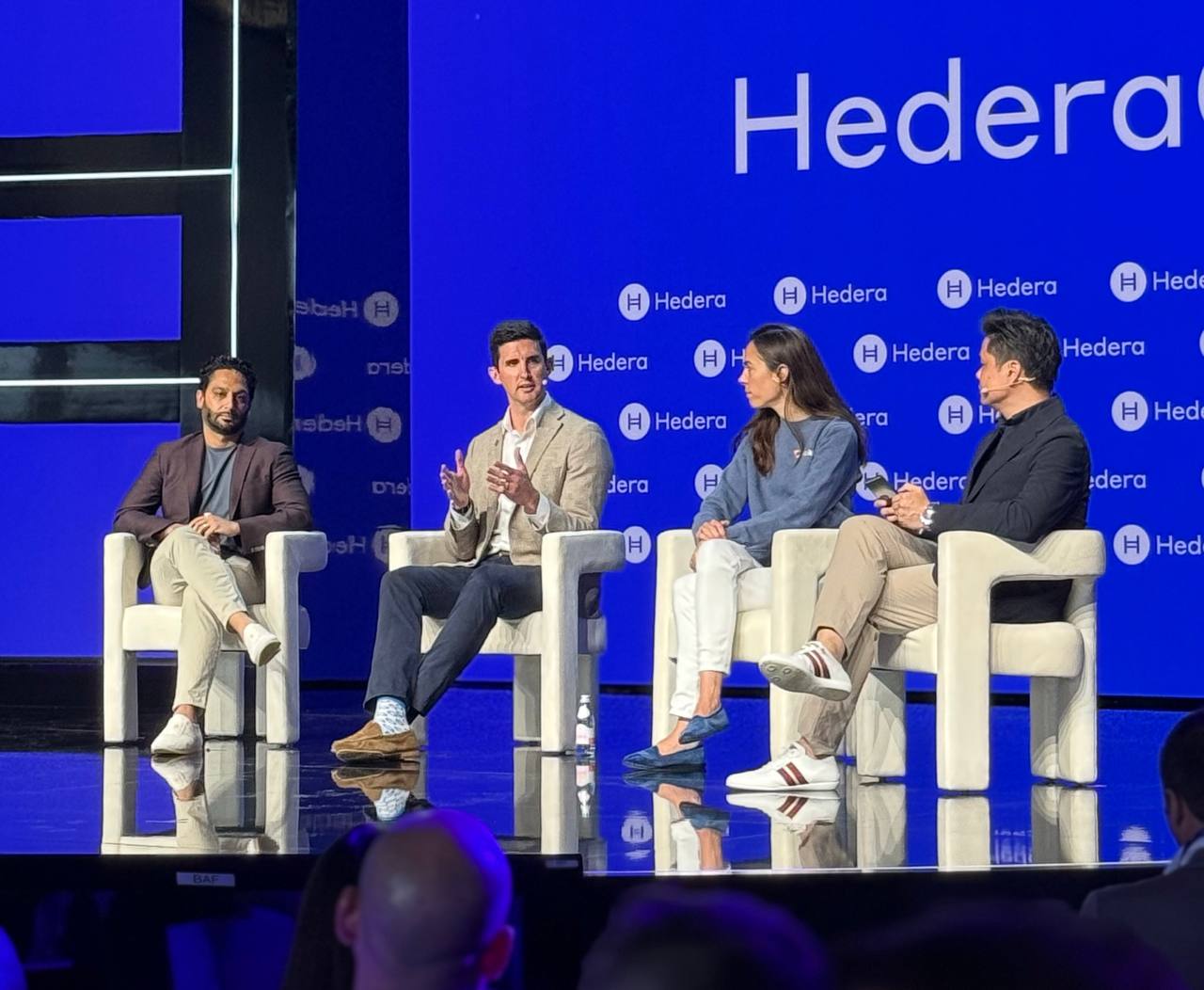
During HederaCon 2026, Chainlink Labs’ Head of Tokenization, Colin Cunningham, sat down with Fireblock’s Neil Chopra, Kaiko’s Ambre Soubiran, and Hashgraph’s Jeff Tchui for a panel discussion about establishing the connective tissue for onchain finance.
Looking at the current state of institutional adoption, Cunningham said the space is moving away from early concepts of private blockchains and proofs of concept toward the profitability side of banking systems.
Last year, Chainlink, Kinexys by J.P. Morgan, and Ondo Finance established a novel cross-chain DvP solution powered by the Chainlink Runtime Environment (CRE). The system is designed to reduce counterparty and settlement risk by averting system fragmentation and manual workflows that make DvP transactions difficult to execute while costing market participants more than $914 billion over the past decade.
Cunningham highlighted this integration as an important step toward connecting digitally enabled traditional bank accounts with stablecoins and other assets on public blockchains.
“I think we’re still looking for our explosive breakout moment in the tokenization space,” he said. “What does it look like for the token to actually be the asset – not a representation and not a digital twin.”
He believes the watershed moment will stem from establishing requisite interoperability and compliance.
Cross-Chain Interoperability Protocol (CCIP) leverages Chainlink’s highly resilient oracle infrastructure, which has facilitated over $30 trillion in transaction value. CCIP maintains the highest level of cross-chain security backed by a separate Risk Management Network, and is the only interoperability solution that meets three key institutional security standards: SOC 2 Type 1, SOC 2 Type 2, and ISO/IEC 27001:2022.
Cunningham emphasized the importance of compliance such as KYC, AML, and whitelisting rules when it comes to unlocking the full utility of digital assets.
“We’re building technology for all of those things at Chainlink.”
Over the next several years, he hopes to see the benefits of digital assets – atomic settlement, programmable transactions, composable collateral – gain mainstream adoption.
“We need to burn papers and mint digitals,” he said. “I don’t think we’re going to see the true efficiencies and the true excitement that the blockchain provides from an economic perspective until we do that at scale.”
Chainlink is focused on bridging the analog paper world and the blockchain-based digital world.
“We need an execution environment that everybody trusts and that’s where Chainlink wants to sit,” Cunningham explained.
Once the economic opportunity is clear, he believes regulatory clarity will follow. The ultimate goal is to build a better financial system onchain and unlock global capital at scale.
“I’ll continue to devote my time to thinking about what it takes for different web3 technologies and companies, and the best of fintechs and financial institutions, to come together to get to that execution environment, because if we get to digital native, we’re going to reach the goals we all want to see.”
Watch the full conversation.